Monte Legnoncino
Panoramic balcony of the Alto Lario and an open-air museum of the Great War, it preserves intact the trenches of the Cadorna Line and the historic church of San Sfirio. An unforgettable view.
What to see
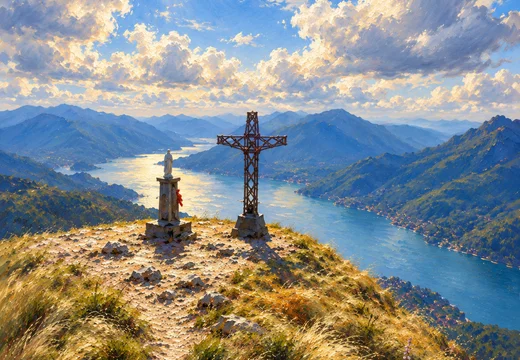
Mount Legnoncino (1,714 m) is one of the most accessible panoramic balconies of the Upper Lario. The trails and routes in the area are well-maintained and enhanced by the CAI of Dervio, historically linked to these mountains and the Roccoli Lorla Refuge, a favored starting point for excursions to Legnoncino and the nearby Mount Legnone.
• The Northern Frontier: the mountain holds significant evidence of the defensive system built during World War I, commonly known as the Cadorna Line. The convenient military road that ascends from Roccoli Lorla leads through trenches, tunnels, walkways, and artillery positions carved into the rock. The fortifications were constructed to control the Pian di Spagna and counter a potential enemy advance through neutral Switzerland.
• The Chapel of San Sfirio: just below the summit stands the small church of San Sfirio, dating back to the 13th century. According to tradition, Sfirio was one of seven hermit brothers who lived on different mountains in the area and communicated with each other by lighting fires on their respective peaks.
• A panorama between lake and Alps: from the summit, the gaze encompasses Lake Como, the Valvarrone, the Pian di Spagna, the entrance to Valtellina, and, on clearer days, a vast portion of the Alps.
• Between Legnone and Lario: Legnoncino is the minor peak of the Mount Legnone group and occupies a strategic position between Lario, Valvarrone, and Valtellina. Its unique location combines alpine environment, military history, and stunning lake views within just a few kilometers.
Getting there
By car to Valvarrone (LC) at the Roccoli Lorla Refuge (ample parking), then you hike for 45 minutes along the comfortable and flat former military road.
Splendid forest route of about 2 hours that starts from the Artesso lake (Sueglio) and intersects the Bellano Refuge and the lower trenches of the Cadorna Line.